Festival au Pays des Enfants Château d’Oex: St. Peter’s Church
During the Festival au Pays des Enfants, St. Peter’s opens its doors to families — free entry. In 2026 the church was open from 22 to 26 July, 11 am to 4 pm.
All year round, you are welcome at our Sunday services at 5:30 pm, in English.
On the Grand Rue in Château-d’Œx, St. Peter’s Anglican Church is a hidden gem of local history: a small Victorian church born out of the British love affair with the Alps.
Byron, Queen Victoria, the Matterhorn — and 68,000 Great War prisoners. Discover how the English, in love with the Alps, built this little Victorian church in the heart of Château-d’Œx. Read the story ↓
Located on Grand Rue 49, a 5-minute walk from the centre of the village, St. Peter’s offers families a peaceful space to rest and explore, a step away from the bustle of the festival.
A Remarkable History: From Romantic Paradise to Victorian Resort
How the Alps Became a British Obsession
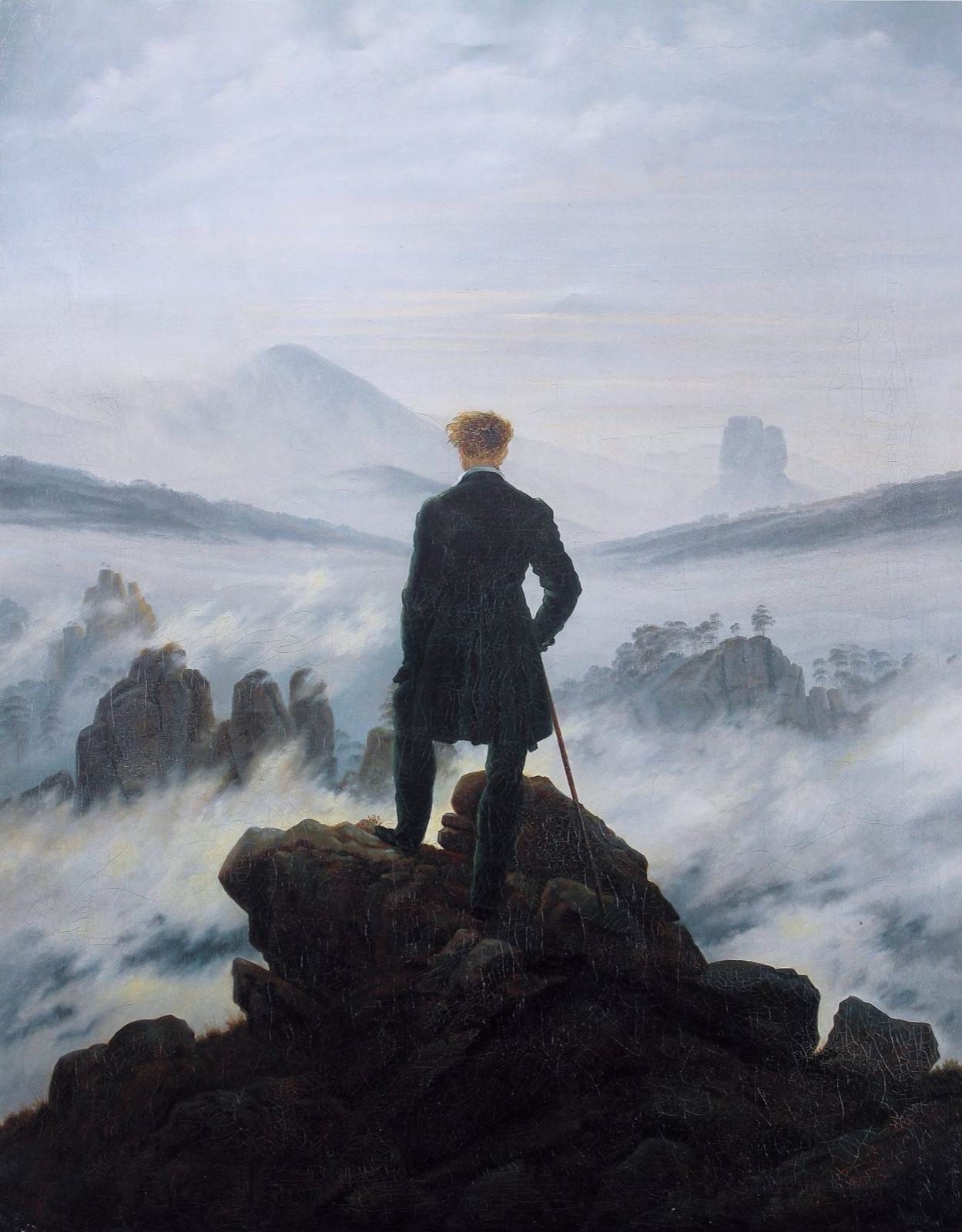
Before the 19th century, the Swiss Alps were viewed as a haunted, dangerous wilderness – “the broken Ruins of the former World” as one poet described them. Mountains were seen as divine punishment, reminders of humanity’s fall from grace. But the Romantic movement completely transformed this perception.
It began with writers like Jean-Jacques Rousseau, whose writings portrayed Switzerland as a land of natural beauty and authentic values – freedom, democracy, and harmony. Then came the British Romantic poets. In 1816, Lord Byron and the Shelleys spent their famous “haunted summer” on Lake Geneva, where Mary Shelley conceived Frankenstein during terrible storms. Byron’s poems about Switzerland became instant bestsellers, making places like Château de Chillon tourist destinations that remain popular today.
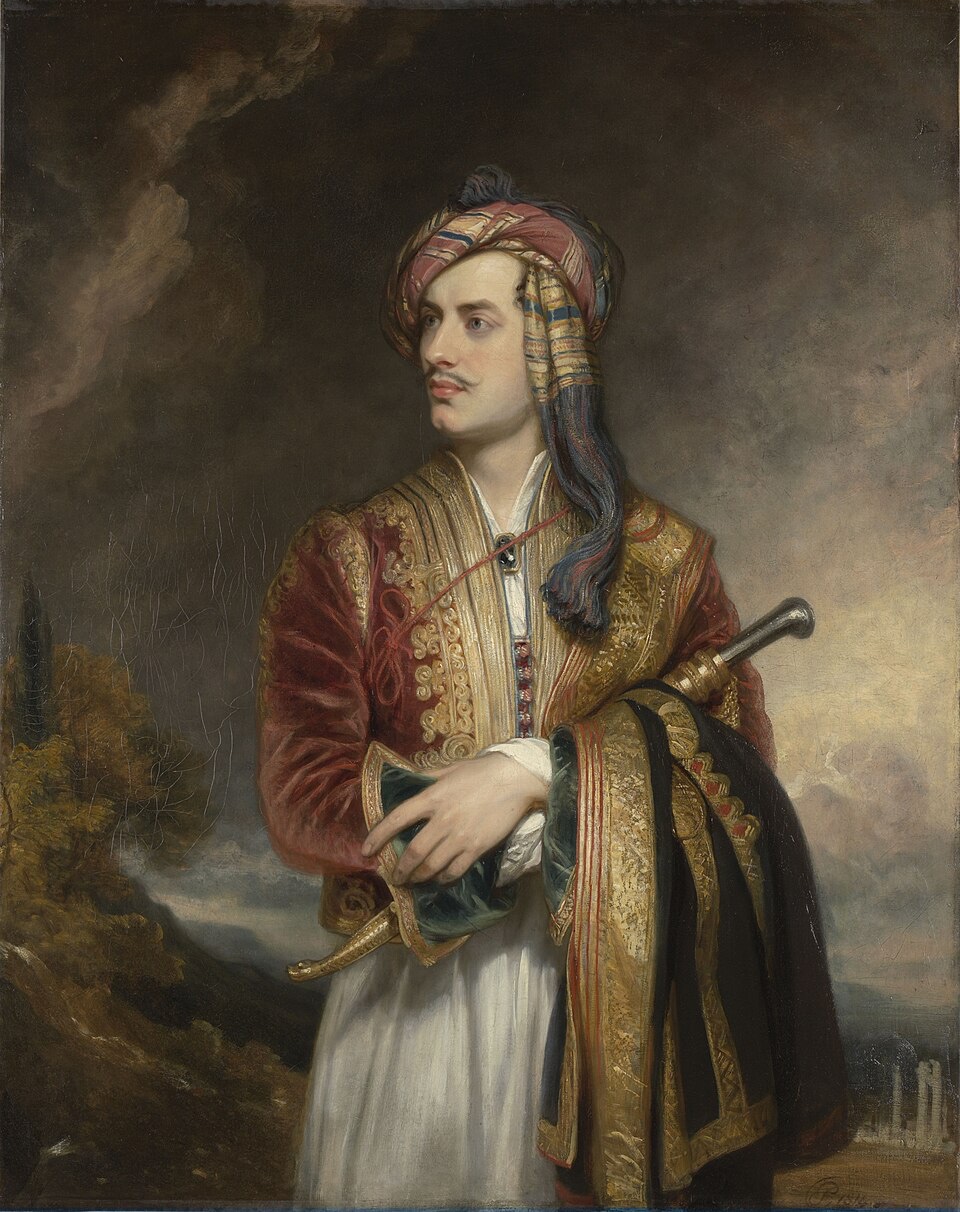
The British were captivated. Having nothing like it at home, and thanks to this huge romantic movement with Turner, Wordsworth and Byron writing and painting about them, the Alps had become what the Romantics saw as the sublime – a place where one could experience both terror and beauty, finding spiritual renewal in nature’s grandeur.
The Birth of Alpine Tourism
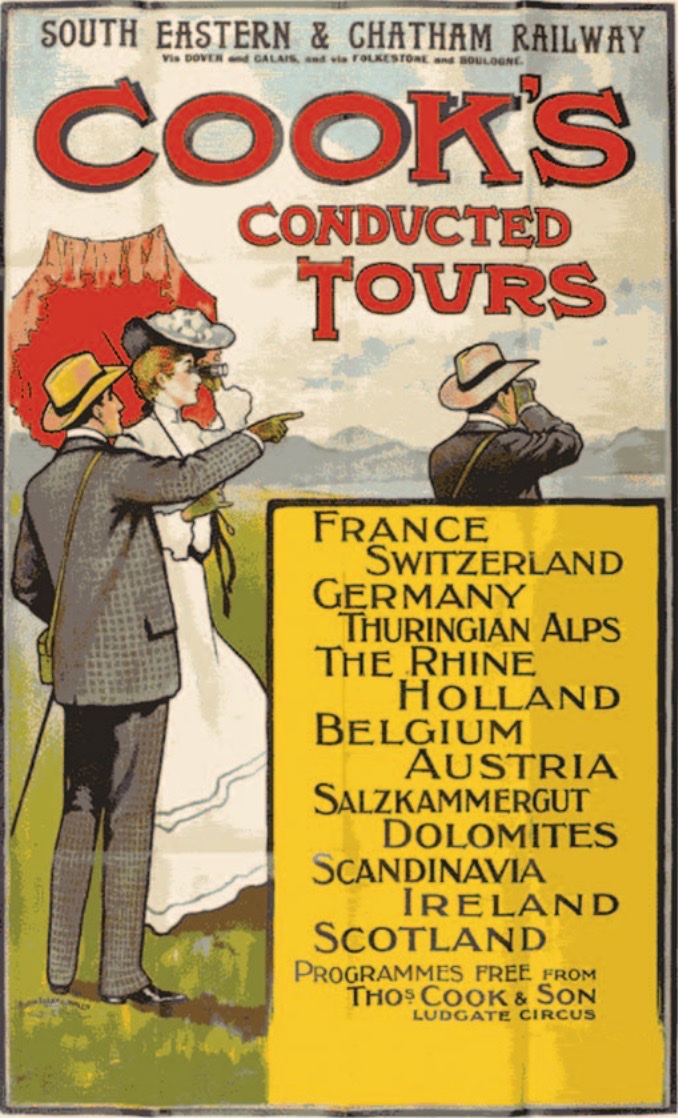
This romantic fascination sparked a tourism revolution. Thomas Cook organized the first package tour to Switzerland in 1863, opening the floodgates. As one historian noted, Switzerland then, outside Zurich, Geneva and the main centers, was relatively poor. Half the people lived off the land and earned next to nothing. But tourism brought money to exactly the areas that didn’t have it before, the rural areas.
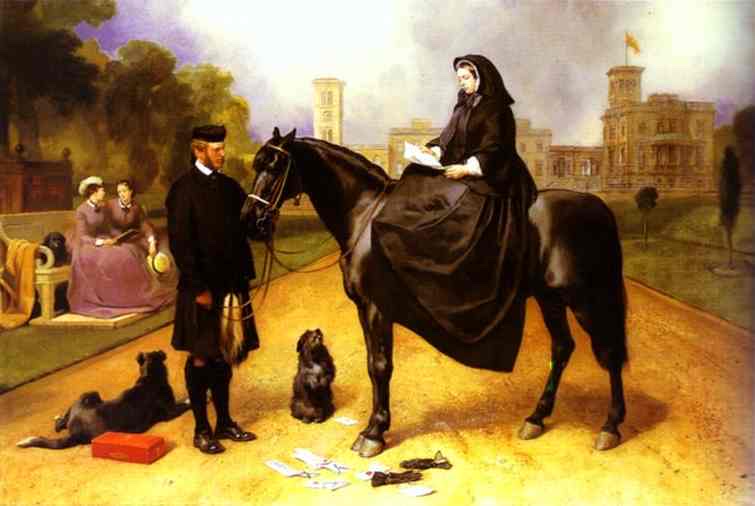
Château d’Oex quickly became a favorite destination, even before modern transport arrived. Victorian families made the arduous journey by foot or horseback over the Col de Jaman pass, determined to experience the Alpine paradise the Romantics had described. By 1866 – nearly 40 years before the railway arrived – the English community was already so established that they had their own chaplain holding services in hotel lounges. The chaplains would stay for a month or two during the summer season, conducting services for families staying at the Hotel Berthod and other establishments.
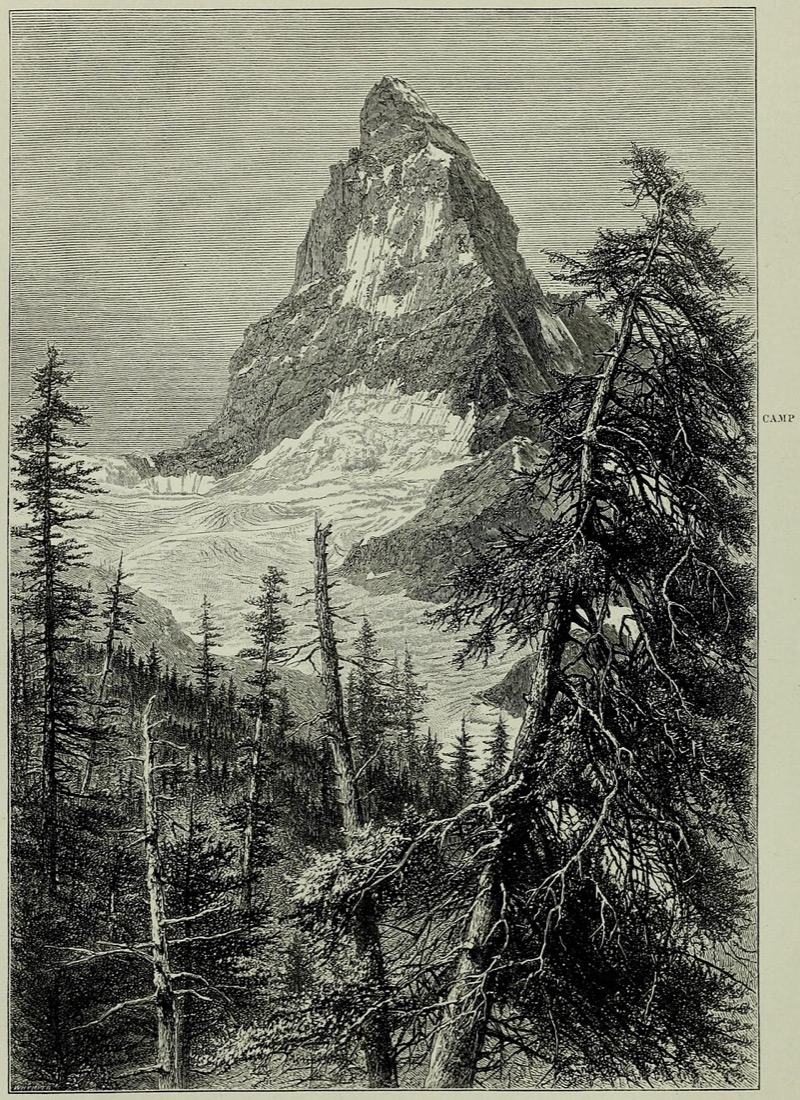
When the MOB (Montreux-Oberland Bernois) railway finally reached Château d’Oex in 1904, it transformed accessibility, bringing even more visitors. But it was those early pioneers, inspired by Romantic literature and willing to endure difficult mountain passes, who first established Château d’Oex as an English-speaking destination. By the 1890s, this community had grown so large and permanent that they needed their own church – and St. Peter’s was born in 1899, built in just two months to serve this growing congregation of Alpine enthusiasts.
The WWI Story: Switzerland’s Great Humanitarian Mission
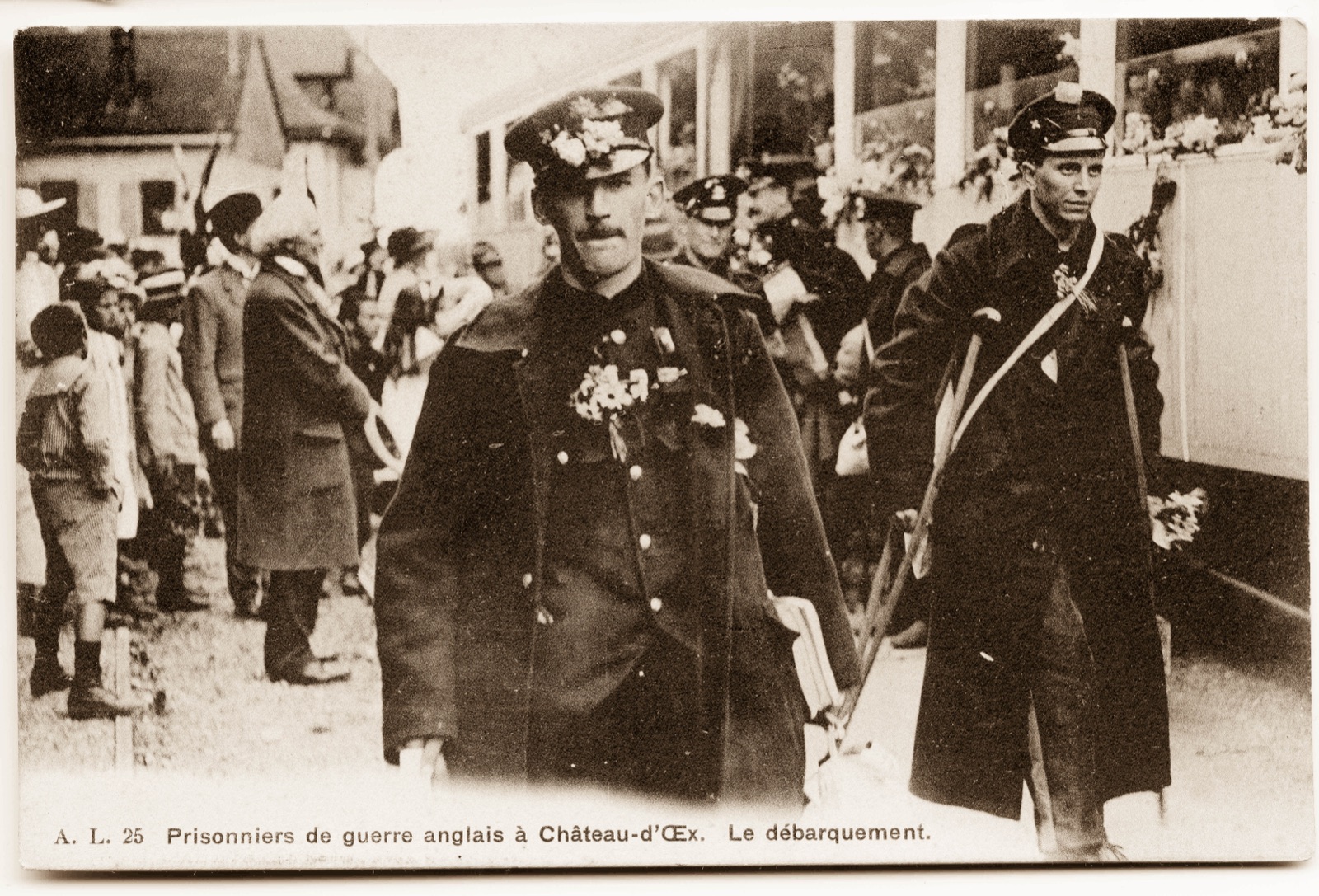
One of our most moving historical episodes reflects Switzerland’s extraordinary humanitarian role during World War I. In 1916, Château d’Oex became part of a remarkable international effort that saw Switzerland welcome 68,000 wounded and sick prisoners of war from all warring nations – a groundbreaking humanitarian initiative coordinated by the International Committee of the Red Cross (ICRC) and the Swiss government.
This wasn’t just about British soldiers. Between January 1916 and August 1919, Switzerland transformed into a vast hospital, welcoming 37,515 French, 21,000 Germans, 4,326 Belgians, and 4,081 British soldiers. What made this possible was Switzerland’s unique position as a neutral nation and the diplomatic efforts of Gustav Ador, president of the ICRC, working with Pope Benedict XV and the Swiss Federal Council.
The arrangement was revolutionary: instead of languishing in harsh prison camps where disease was rampant, wounded and sick prisoners who were too injured for military service but not ill enough for repatriation were sent to recover in Swiss mountain resorts. The warring nations paid for their soldiers’ care, which saved the Swiss tourism industry devastated by the war.
Château d’Oex welcomed its first British contingent on May 30, 1916 – 216 soldiers and 30 officers. The scenes at their arrival were unforgettable: thousands of Swiss citizens crowded railway stations from Constance to Montreux, showering the trains with flowers, chocolates, and cigarettes. One soldier told the British Minister, “God bless you, Sir: it’s like dropping right into ‘eaven from ‘ell.”
St. Peter’s Anglican Church became the spiritual home for these British soldiers. Rev. E. Dudley Lampen was officially appointed by the Swiss government to oversee their spiritual welfare. The church was so packed that additional halls had to be hired. In 1917, recognizing the soldiers’ needs, a beautiful Goll organ was installed – funded by donations from Times readers who responded to the chaplain’s appeal.
This Swiss internment program established Switzerland’s reputation for humanitarian action and demonstrated how neutral nations could alleviate suffering even during total war. For the internees, it meant proper medical care, decent food, freedom to move within village limits, and for officers, even visits from their wives. The program became a model for humanitarian treatment that influenced the Geneva Conventions we know today.
Our church memorial plaque and the 1917 organ remain as testimonies to when Château d’Oex played its part in what one historian called Switzerland’s “Labour of Love” – proof that even in humanity’s darkest hours, compassion can prevail.
Practical Information for Visitors
Location and Access
- Address: Grand Rue 49, 1660 Château d’Oex
- From the village centre: 5-minute walk along Grand Rue
- Parking: Limited street parking nearby
- Accessibility: Ground floor access available
A Bridge Between Cultures
For over a century, St. Peter’s has served as a bridge between the international English-speaking community and the local Swiss population. From Victorian holidaymakers to modern-day residents and visitors, the church continues to welcome people of all backgrounds.
During the festival, we were delighted to open our doors to the wider community, offering a glimpse into this unique aspect of Château d’Oex’s multicultural heritage.
Everyone Welcome
Whether you’re interested in local history or simply curious about this English church in the heart of the Pays d’Enhaut, you’re warmly welcome at St. Peter’s.
Visiting Us
You’re always welcome to join us for our regular Sunday services at 5:30 PM, conducted in English. No reservation is needed and there’s no charge. Our congregation includes long-term residents, seasonal visitors, and Swiss locals who enjoy worshipping in English.
A remarkable history, a few steps off the Grand Rue.
St. Peter’s Anglican Church
Grand Rue 49, 1660 Château d’Oex
Website: www.stpeters.ch
Minister: Rev. Mark Fletcher
A warm welcome awaits you – where Byron’s romantics meet modern families, and history lives on in our Alpine village.